
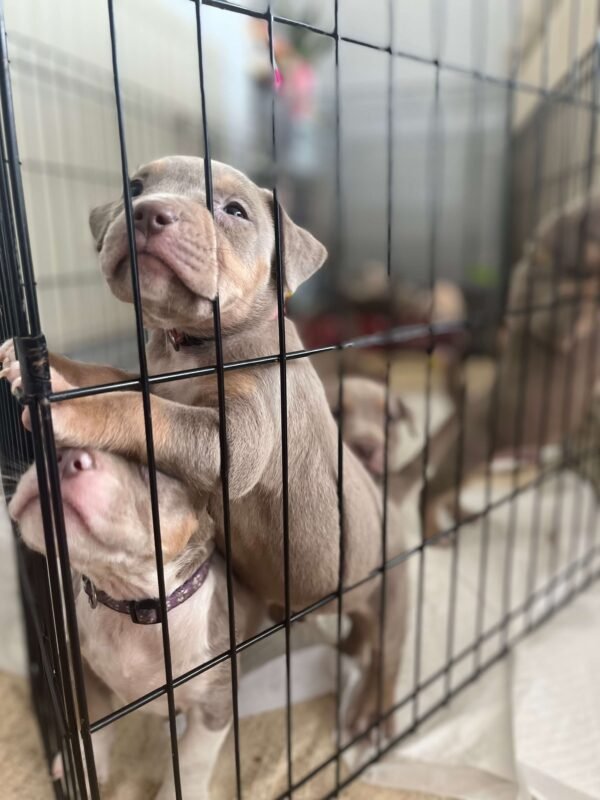
Are Pocket Bullies Banned? A Guide to Breed-Specific Legislation
For puppy lovers drawn to the compact, muscular frame and affectionate nature of the Pocket Bully, a pressing question often arises: “Is it legal to own one?” The answer is not a simple yes or no, but a complex tapestry of laws that vary dramatically from country to country, state to state, and even city to city. The world of dog ownership is increasingly intersecting with legal regulations, and “bully breeds” often find themselves at the center of this debate.
The term “Pocket Bully” itself is a modern classification, a specific size variant of the American Bully breed. However, in the eyes of the law, these distinctions can become blurred, leading to confusion and concern for responsible owners. This blog post will serve as your comprehensive guide. We will demystify the concept of Breed-Specific Legislation (BSL), clarify the legal status of Pocket Bullies, delve into the fierce controversy surrounding these laws, and provide a clear path for responsible ownership in a regulated world. Understanding these regulations is not just about compliance—it’s about advocating for your dog and the breed as a whole.
Understanding Breed-Specific Legislation (BSL)
To grasp the legal landscape for Pocket Bullies, one must first understand the governing principle behind most dog bans: Breed-Specific Legislation, or BSL. BSL is a law or regulation that either prohibits or restricts the ownership of certain dog breeds or types based solely on their appearance, rather than an individual dog’s behavior or history.
These laws were largely enacted in response to high-profile dog attacks, with the intention of enhancing public safety. The underlying assumption of BSL is that certain breeds are inherently more dangerous, and by restricting them, the number of dog bites will decrease.
BSL can take several forms, including:
-
Complete Bans: An outright prohibition on owning, breeding, or selling a specific breed. Existing dogs may be “grandfathered in” under strict conditions, such as mandatory muzzling in public, but no new dogs of that breed can be acquired.
-
Restrictions and Conditions: These are more common than outright bans. They may require owners to:
-
Secure special permits or licenses for their dog.
-
Maintain specific liability insurance (e.g., $100,000 coverage).
-
Keep the dog in a secure, locked enclosure on their property.
-
Use a muzzle and a leash of a certain length whenever the dog is in public.
-
Spay or neuter the animal.
-
-
“Pit Bull” Bans: Many laws do not explicitly list “Pocket Bully.” Instead, they ban “Pit Bull Terriers,” which is often used as a blanket term that can encompass the American Pit Bull Terrier, American Staffordshire Terrier, Staffordshire Bull Terrier, and any dog that has the “substantial physical characteristics” of these breeds. This is where the Pocket Bully, with its similar muscular build and head shape, often gets entangled.
The enforcement of BSL is a significant challenge. Animal control officers are often tasked with visually identifying a dog’s breed, a highly subjective and unreliable method that can lead to well-behaved mixed-breed dogs being wrongly classified and subjected to these laws.
Are Pocket Bullies Specifically Banned? The Legal Gray Area
This is the core of the issue for potential and current Pocket Bully owners. The legal status of the Pocket Bully is fraught with ambiguity.
The Pocket Bully is a recognized size variety of the American Bully by kennel clubs like the ABKC (American Bully Kennel Club). However, most existing BSL was written decades before the American Bully was established as a distinct breed. Consequently, the laws have not kept pace with modern breed development.
Here’s why Pocket Bullies often fall into a legal gray area:
-
The “Pit Bull” Umbrella: As mentioned, many laws target “Pit Bull-type” dogs. Because the Pocket Bully was developed from breeds that often fall under this umbrella (like the American Pit Bull Terrier and American Staffordshire Terrier), their physical appearance—muscular body, blocky head, short coat—can cause them to be labeled as a “banned breed” by authorities, regardless of their actual pedigree.
-
Lack of Breed Recognition: While kennel clubs recognize the American Bully, many government municipalities do not. In their legal codes, they only list the traditional breeds. A Pocket Bully owner may find themselves in a position where they have to prove their dog is not a Pit Bull, a difficult and often expensive legal undertaking.
-
Jurisdictional Variance: The situation can be wildly different in two neighboring towns. One city might have a strict ban on “Pit Bulls,” while the next may have no BSL at all. This makes it absolutely essential to research your local laws, not just state or national ones.
Notable Examples of Regions with BSL:
-
United Kingdom: The UK’s Dangerous Dogs Act 1991 bans the Pit Bull Terrier type. The Pocket Bully, due to its physical characteristics, is considered a type of Pit Bull Terrier and is therefore a banned breed. Ownership is only possible under an exemption order, which has strict requirements like neutering, microchipping, third-party insurance, and muzzling and leashing in public.
-
Parts of Canada: Several cities in Ontario, including the entire province until a court ruling in 2021, had long-standing Pit Bull bans. While the provincial ban was overturned, some municipalities maintain their own restrictions.
-
United States: There is no federal ban. BSL exists at the state, county, and city levels. For instance:
-
Miami-Dade County, Florida: Has a long-standing ban on “Pit Bulls.”
-
Denver, Colorado: Also had a notorious Pit Bull ban, though it has recently been replaced with a breed-restricted license requiring specific owner standards.
-
Many U.S. States: Over 20 states, including New York and Illinois, have passed laws that prohibit municipalities from enacting BSL, creating “state-wide preemptions” that protect owners of all breeds.
-
The Controversy Surrounding BSL and Pocket Bullies
The existence of BSL is one of the most hotly debated topics in the canine world. The debate pits public safety concerns against animal welfare and owner rights, Pocket Bullies For Sale with strong, evidence-based arguments on both sides.
Arguments Against BSL (The Case for Repeal):
-
Ineffectiveness: Numerous peer-reviewed studies, including from the American Veterinary Medical Association (AVMA) and the Centers for Disease Control and Prevention (CDC), have concluded that BSL is not effective in reducing dog bite rates. Communities that have repealed BSL have not seen a subsequent increase in dog bites, especially when they replace it with non-breed-specific laws.
-
Punishing Responsible Owners & Good Dogs: BSL disproportionately affects responsible owners who properly socialize, train, and contain their dogs, while irresponsible owners simply ignore the laws or switch to another, unregulated breed.
-
Focus on Deeds, Not Breeds: Opponents argue that laws should target irresponsible ownership and dangerous behavior in any dog, regardless of breed. This includes measures like enforcing leash laws, penalizing owners for neglect or failure to control their animal, and promoting spay/neuter programs.
-
The “Pit Bull” Identification Problem: The inability to visually identify a dog’s breed with accuracy makes BSL inherently flawed and unfair. A mixed-breed dog with a square jaw can be confiscated, while a poorly behaved dog of a non-banned breed remains untouched.
Arguments in Favor of BSL (The Public Safety Perspective):
-
Statistical Data: Proponents often cite statistics that show certain breeds, including those labeled “Pit Bulls,” are responsible for a disproportionate number of severe and fatal dog attacks. They argue that these breeds possess a combination of physical strength and gameness that makes their attacks more dangerous.
-
Public Perception and Fear: Following a severe attack, there is often significant public pressure on lawmakers to “do something.” BSL is seen as a tangible, if imperfect, response to community fears.
-
A Tool for Enforcement: Some law enforcement agencies argue that BSL gives them a tool to proactively address dogs owned by individuals involved in criminal activity, such as dogfighting rings.
How to Be a Responsible Pocket Bully Owner in a Regulated World
Given the complex legal and social landscape, owning a Pocket Bully comes with a heightened level of responsibility. Your actions not only affect your dog’s life but also contribute to the public perception of the entire breed.
Essential steps for every Pocket Bully owner:
-
1. Research Your Local Laws Thoroughly: Before acquiring a Pocket Bully, go beyond a simple Google search. Contact your local city clerk, animal control office, or a knowledgeable real estate attorney to understand the exact ordinances in your city, county, and state. Do not rely on breeder assurances.
-
2. Prioritize Training and Socialization: This is the single most important thing you can do. Enroll in a positive reinforcement-based puppy kindergarten and obedience classes. Expose your Pocket Bully to a wide variety of people, places, sounds, and other (calm) dogs in a controlled manner to build their confidence and ensure they are well-adjusted ambassadors for their breed.
-
3. Practice Secure Containment: A secure, fenced yard is highly recommended. Never allow your Pocket Bully to roam freely. Ensure all gates are self-latching and that your dog cannot escape. This protects your dog, your community, and your legal liability.
-
4. Be a Responsible Public Ambassador: Always keep your dog on a leash in public. Be attentive to your surroundings and be prepared to calmly manage any negative comments or fearful reactions from others. Carry high-value treats to redirect your dog’s attention.
-
5. Obtain Pet Liability Insurance: Even if not required by law, securing a pet liability insurance policy (often available as a rider on your homeowner’s or renter’s insurance) is a prudent step for any owner of a powerful dog.
-
6. Advocate for Change: If you live in an area with BSL, consider supporting organizations like the Animal Farm Foundation or the ASPCA, which work to replace BSL with more effective, breed-neutral dangerous dog laws.
Conclusion: Knowledge is Your Best Defense
The question “Are Pocket Bullies banned?” does not have a universal answer. Their legal status is a patchwork of outdated laws, subjective identification, and intense public debate. While the modern trend is shifting away from BSL toward breed-neutral regulations, many Pocket Bully owners still live under the shadow of restrictive legislation.
For the puppy lover considering this affectionate and loyal breed, the path forward is one of diligent research and unwavering responsibility. By knowing your local laws, committing to exceptional training and socialization, and being a model owner, you can provide a wonderful life for your Pocket Bully. You become part of the solution, demonstrating through actions that responsible ownership, not the breed of the dog, is the true key to public safety. In a world quick to judge, your well-behaved and happy Pocket Bully is the most powerful argument against unfair legislation.
